
Hi, I’m Wendy
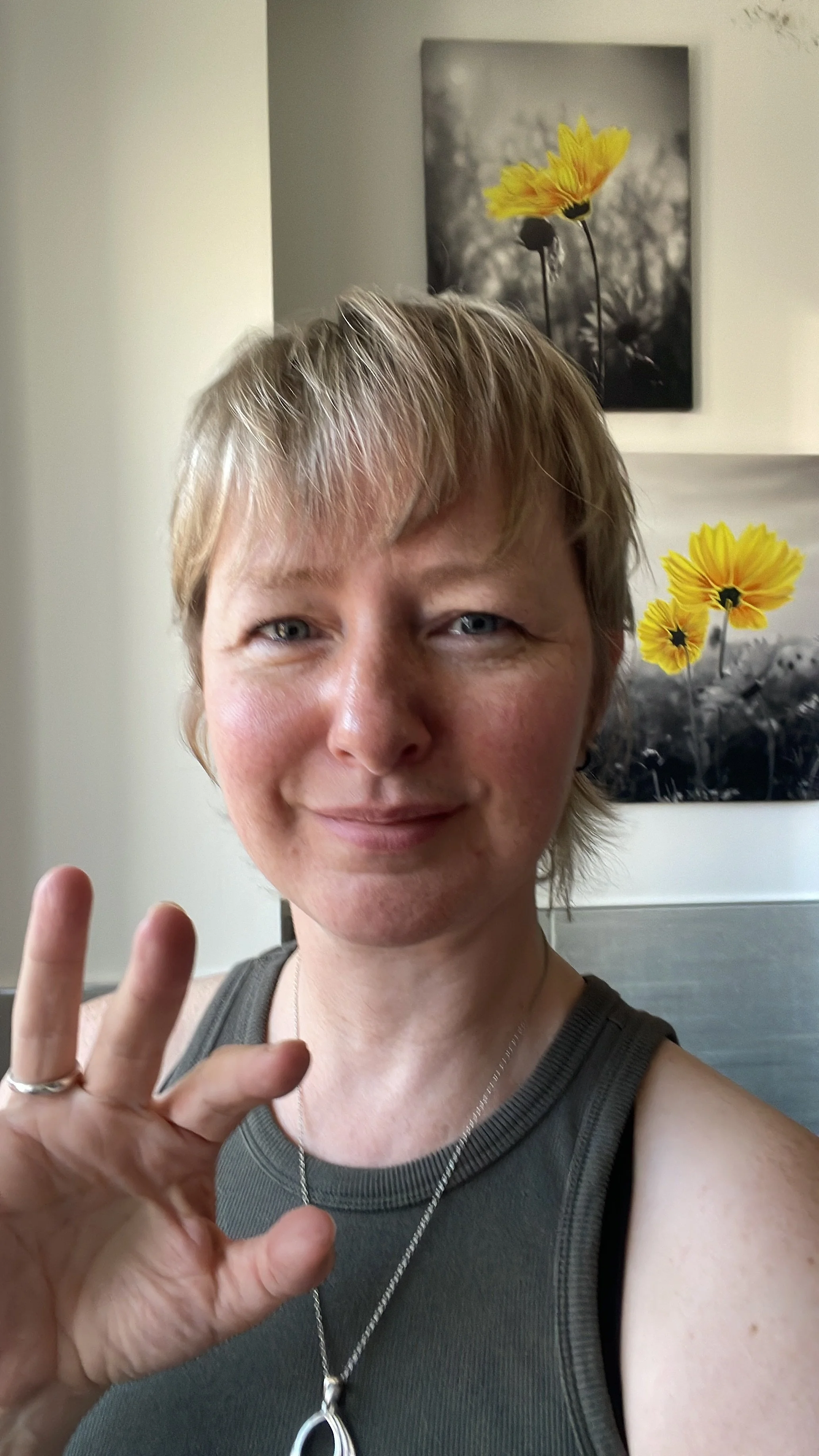
It’s good to meet you.
This is the bit where I tell you who I am, what I’m doing and how I got here. Yes, that’s right. It’s the J word: journey.
If you came looking for the short version, you can skip straight to my Artist’s Statement or Artist’s Bio.
Still here? Excellent.
I came to art the long way round.
I trained as a systems engineer and spent nearly twenty years working in engineering, transport and innovation. I loved solving complicated problems, figuring out how things worked and making ideas real. For a long time, work was also a huge part of how I understood myself.
At the same time, a chronic illness that had begun in my teens was gradually taking pieces of my life away. Dancing went. Long walks in nature went. Theatre, cinema and socialising became harder. Eventually I could no longer work and, at my worst, I was largely housebound.
Losing what I could do also meant losing much of the person I thought I was. If work had been my purpose and I could no longer work, what was left? What made a life meaningful? What made a person whole?
I didn’t have an answer.
But I kept making things.
When my body couldn’t do very much, my hands and mind still could. I painted, sculpted, folded, wove. I played and experimented with one medium after another. For a long time I treated making as something secondary, something to occupy me while real life was on hold.
Eventually I realised I had it backwards.
I became an engineer because I loved to make things.
Turns out, making was the point all along.
“TURNS OUT, MAKING WAS THE POINT ALL ALONG”
Finding Kinusaiga
In 2025, while volunteering with a mental-health recovery charity leading art sessions, I came across Kinusaiga, a Japanese technique in which fabric is pressed into grooves cut into a surface.
There were very few explanatory resources available at the time, so the engineer in me did what she has always done: I took the process apart, worked out how it functioned and found a way to make it work.
I taught it to the group. Then I kept experimenting.
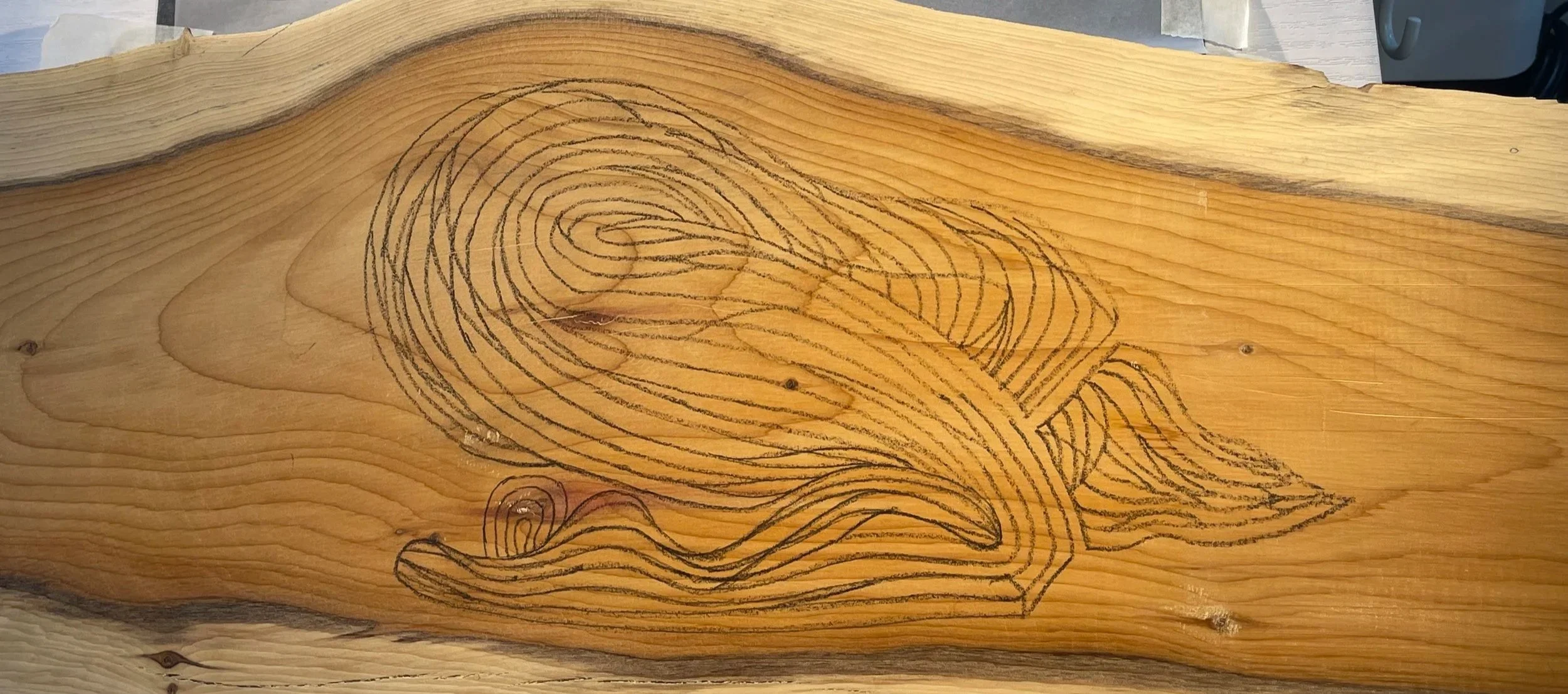
Gradually, the technique became something much more personal. I began carving directly into reclaimed wood, allowing its grain, shape and irregularities to become part of the composition rather than simply treating it as a surface to cover. I moved from purely abstract towards figurative work, using reclaimed textiles, colour, texture and bodily form to explore emotional states.
That is the practice I am developing now.
Using reclaimed materials began as an environmental decision.
The more forms of making I explored, the more uncomfortable I became with how much new material, particularly plastic, I was bringing into the world. We already have extraordinary amounts of material in circulation. Wherever I reasonably can, I would rather work with what’s already here.
But reclamation has also become part of what the work means.
The materials I use have already had lives. Fabric might once have been clothing. Timber was once a tree and sometimes something else after that. Waiting in my studio, for example, is a wooden panel that once formed part of an old church organ.
I cut, carve and reshape these materials into something new, but their previous existence has not disappeared.
That feels very familiar to me.
My life now isn’t the life I had before illness, reconstructed piece by piece until everything is back where it started. It is something different.
And it can still be whole.
why reclaimed materials?
what i’m exploring
That question, what makes a person whole?, now sits at the centre of my work.
I don’t think wholeness means perfection, or even getting back everything we once had. I’m interested in what makes a life feel meaningful and fully lived from the inside, rather than whether it conforms to somebody else’s idea of what a complete life should contain.
My figures are abstracted rather than literal. Some are held or enclosed, some immersed, others beginning to explore release. I use shape, colour, pattern and tactile surface to communicate feeling rather than to tell a fixed story.
Kinusaiga is intensely tactile. Although the finished works are not always intended to be touched, I want their physicality to remain visible. I like the idea that texture can make you want to reach towards a piece before you quite know why.
Most of all, I want the work to make you feel something.
I know what each piece means to me, but I don’t want to tell another person what they are supposed to feel. Their experience belongs to them.
That has been one of the most important discoveries of becoming an artist.
I spent much of my former life in worlds where value was attached to what could be demonstrated, measured, improved or invented. I had to learn to see the value of art differently.
For me, art gives form to things we cannot always explain. It allows one person’s inner experience to meet another’s.
I’ve spent a lot of my life being told I was too emotional, too sensitive, and trying to turn the volume down on that part of myself.
It turns out that in art, I don’t need to.
“Most of all, I want the work to make you feel something”
WAS is me: Wendy Alison Shahin.
WAS Redesigned began as a name with a little wordplay in it, but the longer I work under it, the more appropriate it feels.
The materials I use were something else. My own life was something else.
Neither needs to return to what it was before in order to become something worthwhile.
Both can be redesigned.
and WAS Redesigned?

Kinusaiga is a textile art form created by Japanese artist Setsu Maeno in the late 1980s. Drawing on the traditional Japanese technique of Kimekomi, in which fabric is tucked into grooves carved into wooden dolls and other forms, Maeno adapted the process to create pictures from textile.
Her early Kinusaiga works used old kimono silks, transforming fabric that had already had one life into something new. That relationship with existing materials is one of the things that first drew me to the technique.
What is Kinusaiga?
How Does it work?
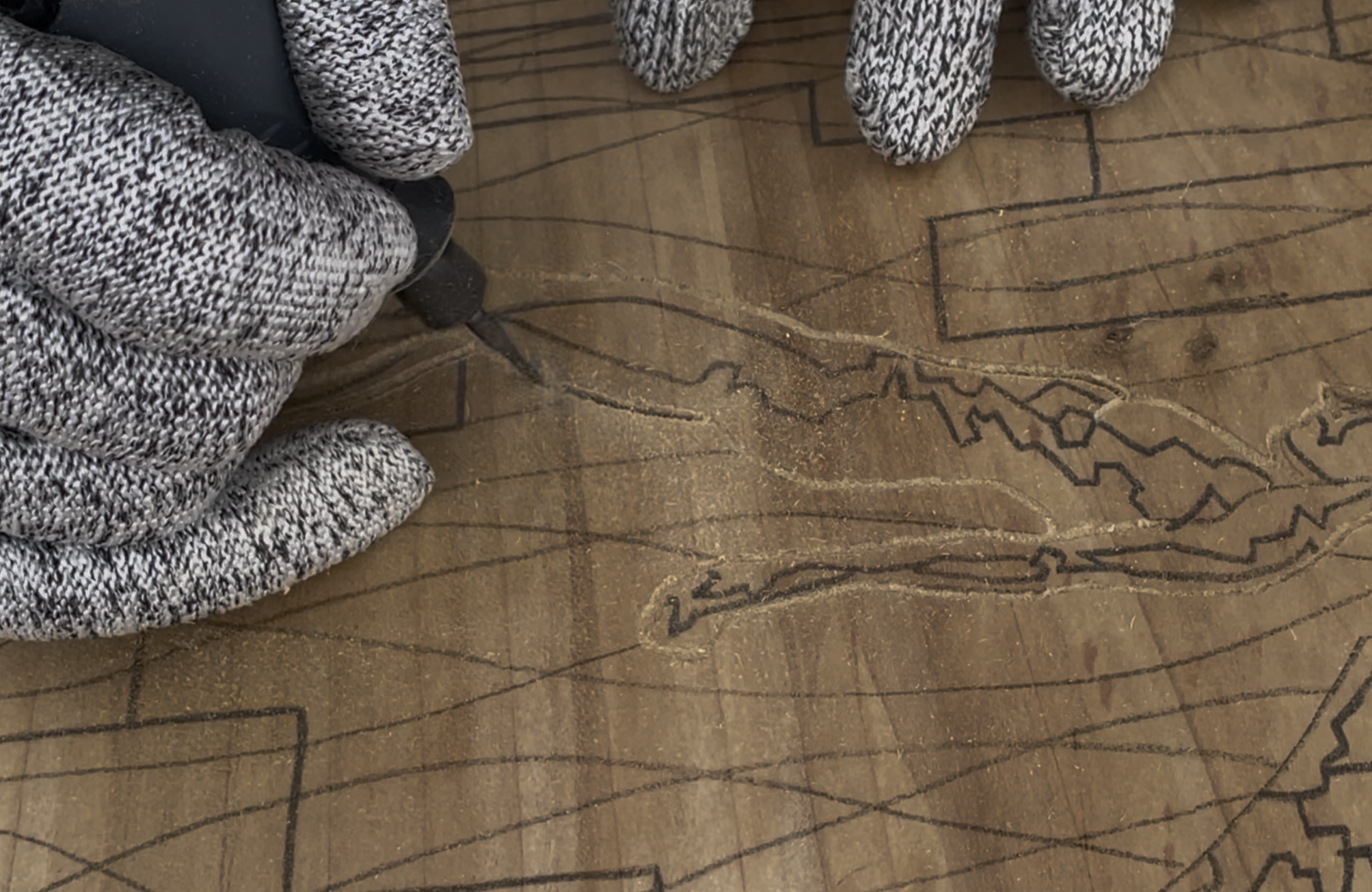
I carve the design directly into the wood, then build the image piece by piece by pressing the edges of the fabric into the carved channels. In my current process, the textiles are held mechanically by the wood, without stitching or adhesive.
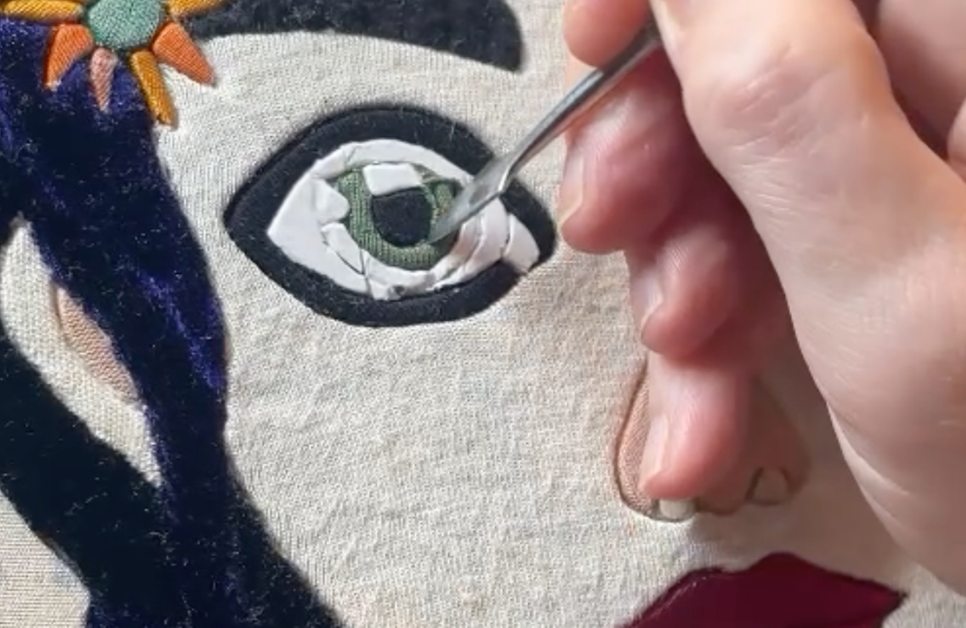
In my own practice, I have taken Kinusaiga in a different direction. I work with reclaimed wood and secondhand or unwanted textiles, allowing the grain, shape, marks and previous life of the timber to become part of the composition rather than simply acting as a surface beneath it.
How Do I Use It?
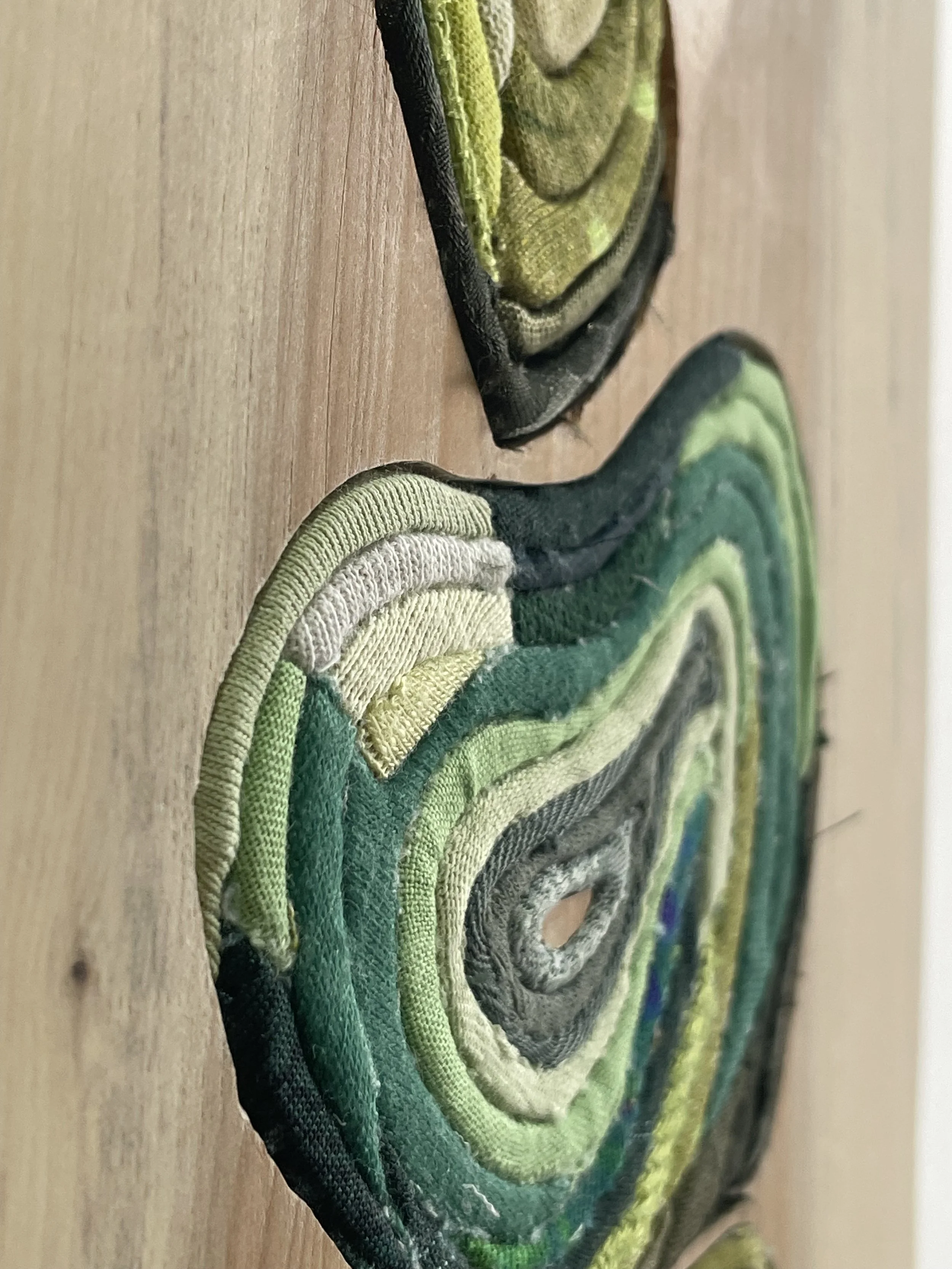
The result sits somewhere between image, textile and relief: hard wood against soft fabric, smooth areas against intensely tactile ones, with the material itself remaining visibly present.
Every element in my work had a story before it reached me. I’m interested in what happens when those materials are given another form, without asking them to forget what they were before.
what does it all become?
Kinusaiga was created by Japanese artist Setsu Maeno. Explore her work on Instagram
Artist’s statement
My work asks a question I do not expect to answer neatly: what makes a person whole?
The question grew from my experience of long-term illness, and from the loss of identity and purpose that came when the life I had built became unavailable to me. What interested me was not how to recover what had been lost, but how a different life might become whole on its own terms.
I make figurative, semi-abstract textile reliefs from reclaimed wood and fabric, using a process developed from Kinusaiga. I carve into the wood and press textiles into its surface, working with rather than concealing the grain, irregularity and history of the materials.
Their former lives matter. Clothing, discarded fabric and reclaimed timber are taken apart and re-formed without pretending they were never something else. That transformation has become a physical counterpart to the questions in the work: what we retain, what changes, and what new form might be possible.
The figures in my practice are often held, immersed, enclosed or released. I use bodily form, colour, pattern and tactile surface to convey emotional states without fixing their meaning. The slowness of carving and placing each piece of textile matters. It is quiet, patient work.
I want the pieces to communicate through feeling before explanation. I know the emotional origin of each work, but I do not want to prescribe the viewer’s response. I want to leave enough space for someone else to encounter it through the experience of their own life.
Artist’s BIo
Wendy Alison Shahin is a British artist based in Oxfordshire, working in figurative textile relief. Through her studio practice, WAS Redesigned, she creates work from reclaimed wood and textiles using a process developed from the Japanese technique of Kinusaiga. Her current work explores wholeness, identity and transformation. Shahin came to art after a nearly twenty-year career in systems engineering and innovation. She discovered Kinusaiga in 2025 while volunteering with a mental-health recovery charity, and has since developed the technique into her own material-led practice.